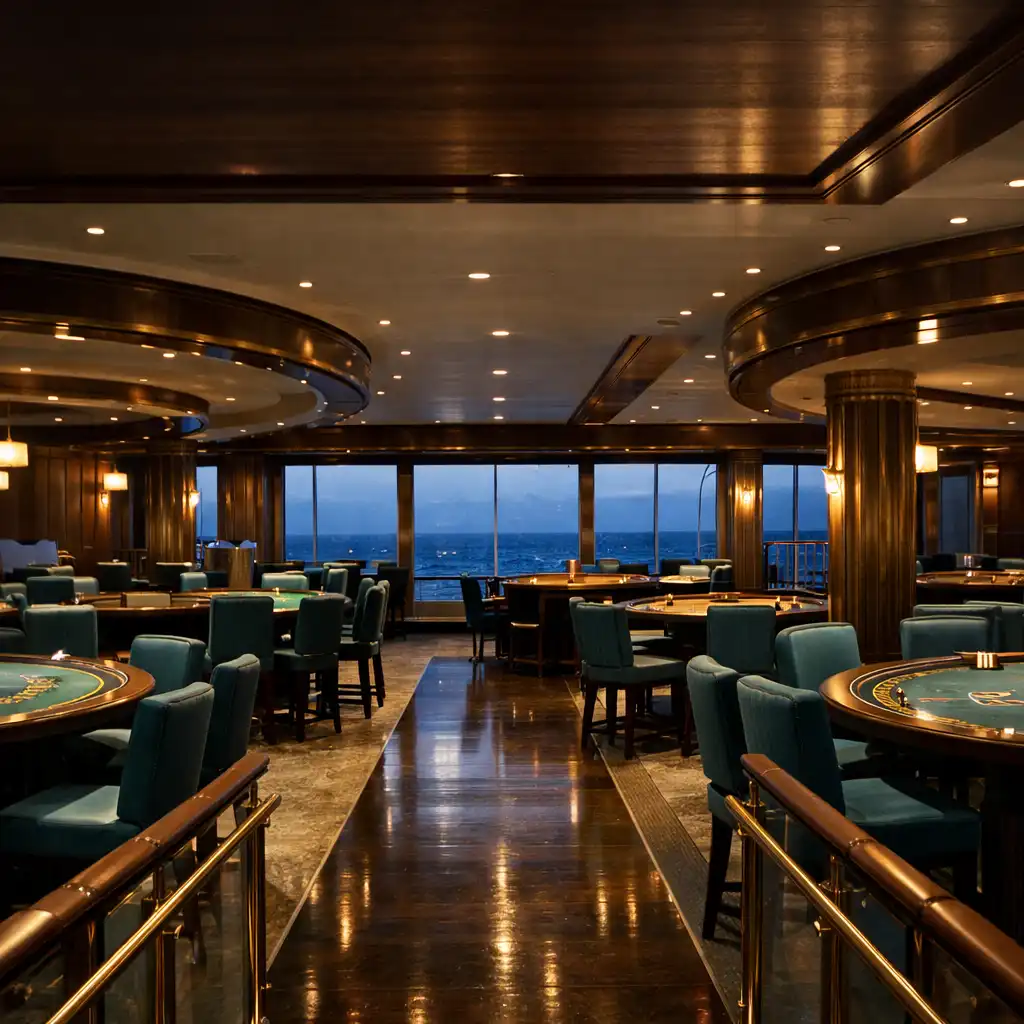
Central aisle and table areas inside a modern cruise ship casino

Deck reference 07 / onboard spaces

Casino at Sea: Inside the Gaming Areas of Cruise Ships

ADSIGHT LTD is an independent informational travel portal for travellers comparing the gaming areas found on some modern cruise ships. This guide looks at table games, casino lounges and the practical planning details that can shape an evening onboard.

Configurations differ between ships. We are not a cruise operator, booking platform or gambling operator; our role is to provide clear editorial context for researching a particular sailing.

Availability and rules vary

Confirm the arrangements for your sailing

Casino availability, opening times, minimum age and rules depend on the cruise line, ship, itinerary, territorial waters and applicable regulations. A casino space may be closed or unavailable at particular times or on certain itineraries. Before travelling, verify current ship-specific information directly with the cruise line rather than assuming that a room, table or operating arrangement described elsewhere will apply to your voyage.

Deck reading / public spaces

A casino is one part of the ship

On some ships, casino areas sit close to evening venues or along public circulation routes; on others, they feel more enclosed. Lighting, table layout, seating, visibility and the way people move through the room all affect whether the space reads as compact, open, sociable or secluded.

A

Table zone

Card tables may form a clear centre of activity, with felt surfaces, chairs and chip stations arranged for close viewing. Their spacing can make the room feel measured and orderly, or more animated where several tables share a central aisle.
B

Social edge

Casino lounges and nearby seating create an observation layer around active tables. A small seating edge may feel intimate, while a broader lounge can separate conversation from table activity and alter the room’s sense of pace.

C

Circulation and sightlines

Entrances, open aisles and the visibility of adjacent public spaces vary substantially by ship design. These details influence how easily visitors can pass through, pause to observe, or find a quieter place away from the main flow.

Table focus / 02

Poker tables: a focused social setting

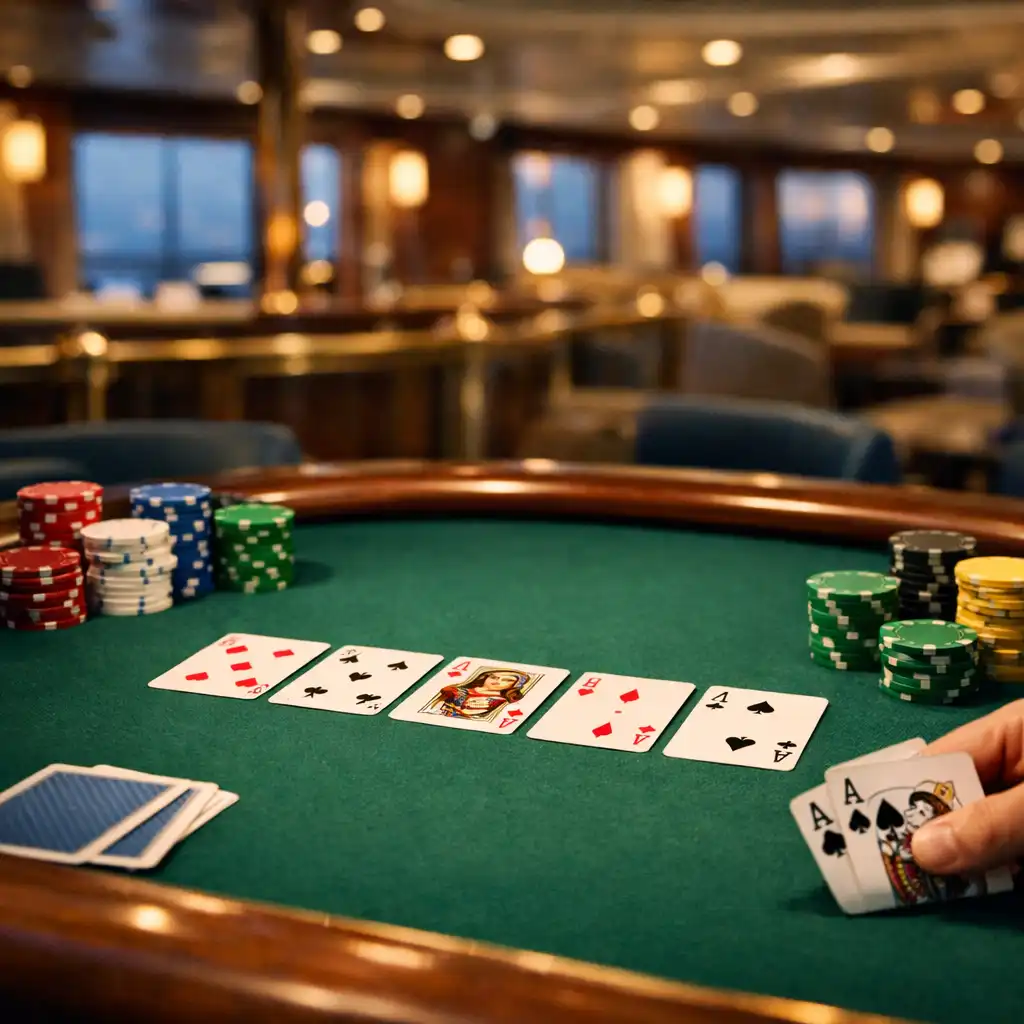
Where poker is provided, an onboard table may be recognised by its felt surface, neatly ordered cards, colourful gaming chips and closely arranged seating. A dealer or host position, polished rail and room lighting can give the area a more concentrated feel than the wider lounge. Formats and availability differ by cruise line, ship, itinerary and applicable conditions, so the physical setting is only one part of what travellers should assess.

For some visitors, simply seeing how the table sits within the room is useful: it can indicate whether the area is integrated with public circulation or placed at a quieter edge of the casino.

  1. Table presence: Is poker listed for the particular ship and sailing?
  2. Seating: Does published material show a dedicated table area or a flexible public space?
  3. Operating information: Have current arrangements, minimum age and applicable rules been confirmed?
Cards and colourful chips arranged on a poker table aboard a cruise ship
A table-height view of cards, felt and chips in a restrained onboard poker setting.

Table focus / 03

Roulette: wheel, layout and visibility

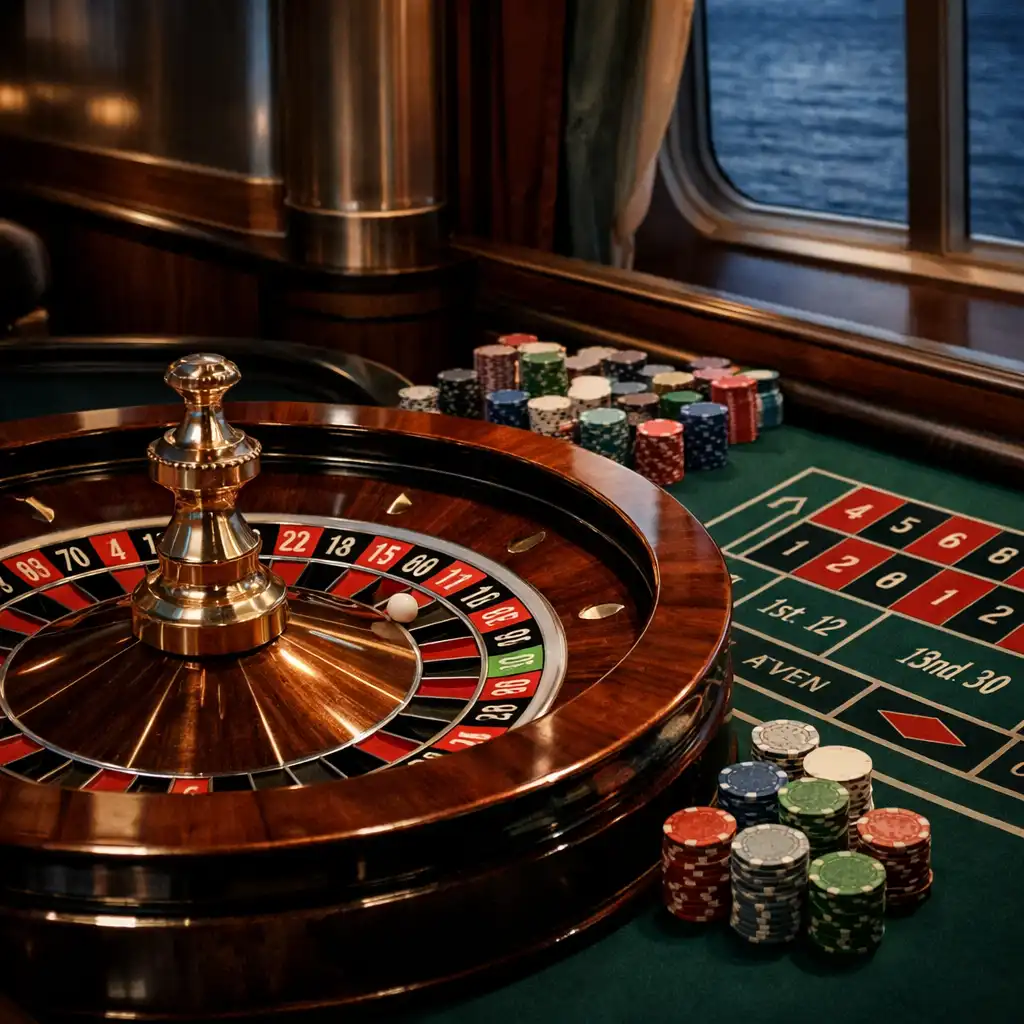
A roulette table is a strong visual feature: the polished wheel, numbered track and felt layout invite clear sightlines around a compact centre of activity. The presence of a live table, its placement and the scale of the surrounding room can differ between ships. For travellers, the useful question is not whether the setting looks dramatic, but how comfortably it fits within the wider public space.

Roulette wheel and felt table inside a cruise ship casino
Wheel, numbered track and felt layout shown as an architectural focal point rather than a promise of provision.

Lighting

Warm table light can make a focused zone feel distinct, while more open lighting may connect it to the surrounding casino lounge.

Circulation

Consider whether guests can pass comfortably around the table or whether it sits close to a main route through public areas.

Seating and sound

Nearby seating, room scale and ambient noise can make a table feel formal, social or comparatively quiet; none is universal across ships.

Check current operational arrangements before relying on roulette being present: availability, times, minimum age and rules remain ship- and sailing-specific.

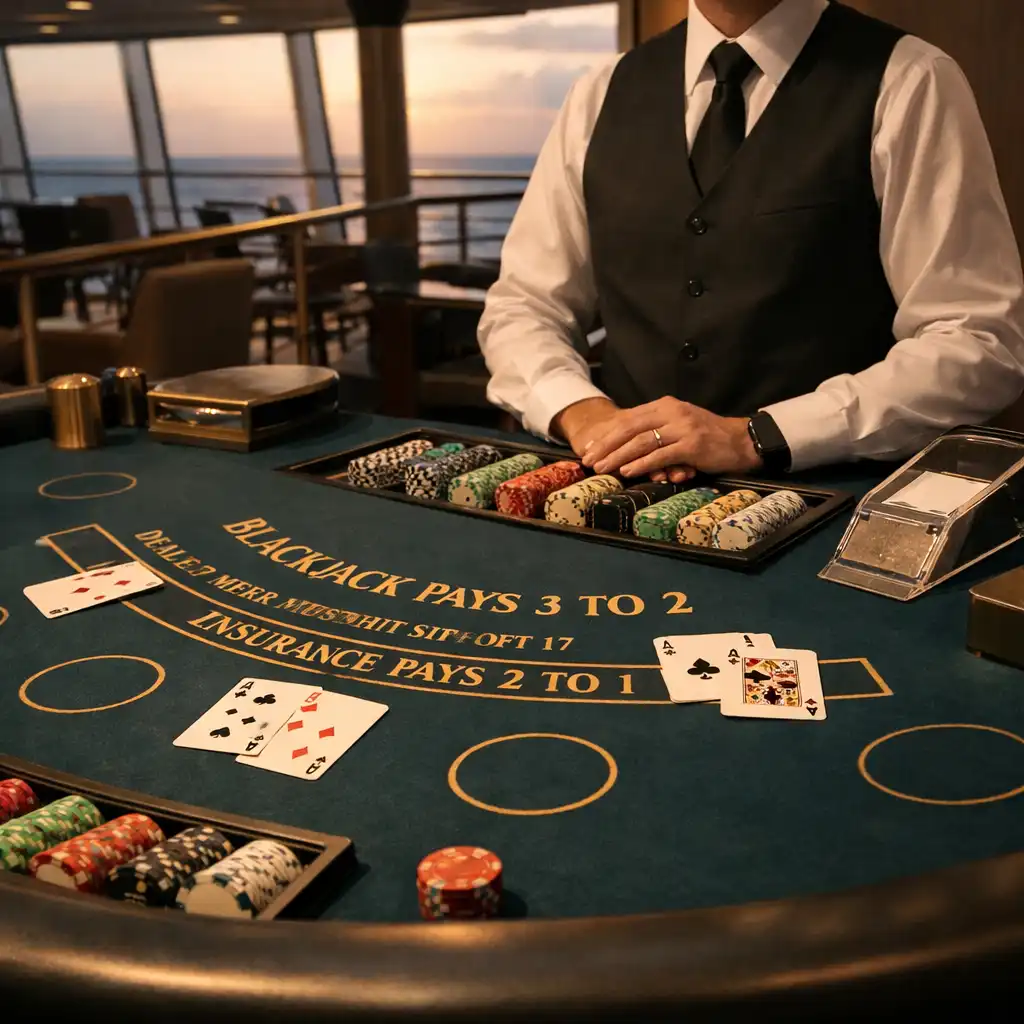
Blackjack table with cards and chip trays aboard a modern cruise ship
A card-table arrangement with felt markings, card positions and a clearly organised dealer area.

Table focus / 04

Blackjack: an organised card-table setting

A blackjack table is often distinguished by visible felt markings, card placement, chip trays and closely organised seating. These material details can make the table area feel structured even when the broader casino is open to adjacent public spaces. Practical setup and atmosphere vary by vessel and operating arrangements, so an image or deck plan should be treated as a guide to possibilities rather than a fixed specification.

For first-time observers and participants, the clearest approach is to read the room, notice any signage and keep attention on the shared table environment.

  1. Observe signagePosted directions may explain local arrangements and requirements.
  2. Follow staff directionsStaff guidance takes precedence where a table is operating.
  3. Respect seatingAllow space for active table positions and nearby guests.
  4. Keep the area clearUse circulation routes rather than lingering in a working table space.

Onboard mood / 05

The evening atmosphere: lounge, dress and conduct

Casino areas can range from lively public rooms to quieter evening corners. Some are compact and enclosed, while others are more integrated with nearby venues and circulation. Light, sound, pacing and social proximity all contribute to the impression, and the balance can differ markedly between ships. A lounge beside the action may suit people watching; a separated seating area can feel calmer. Neither arrangement is inherently better, but each changes how the casino relates to the rest of an evening onboard.

Notice whether public routes run through the room.

Look for seating that supports observation without crowding active tables.

Consider how nearby entertainment and dining spaces influence the room’s pace.

Look at the evening context

Dress may reflect the surrounding dining, bars or entertainment rather than a separate universal casino code. The wider public-deck setting is often the most useful cue.

Follow ship guidance

Ship and event guidance should take precedence over general impressions. Check the information issued for your chosen sailing if attire or access requirements matter to your plans.

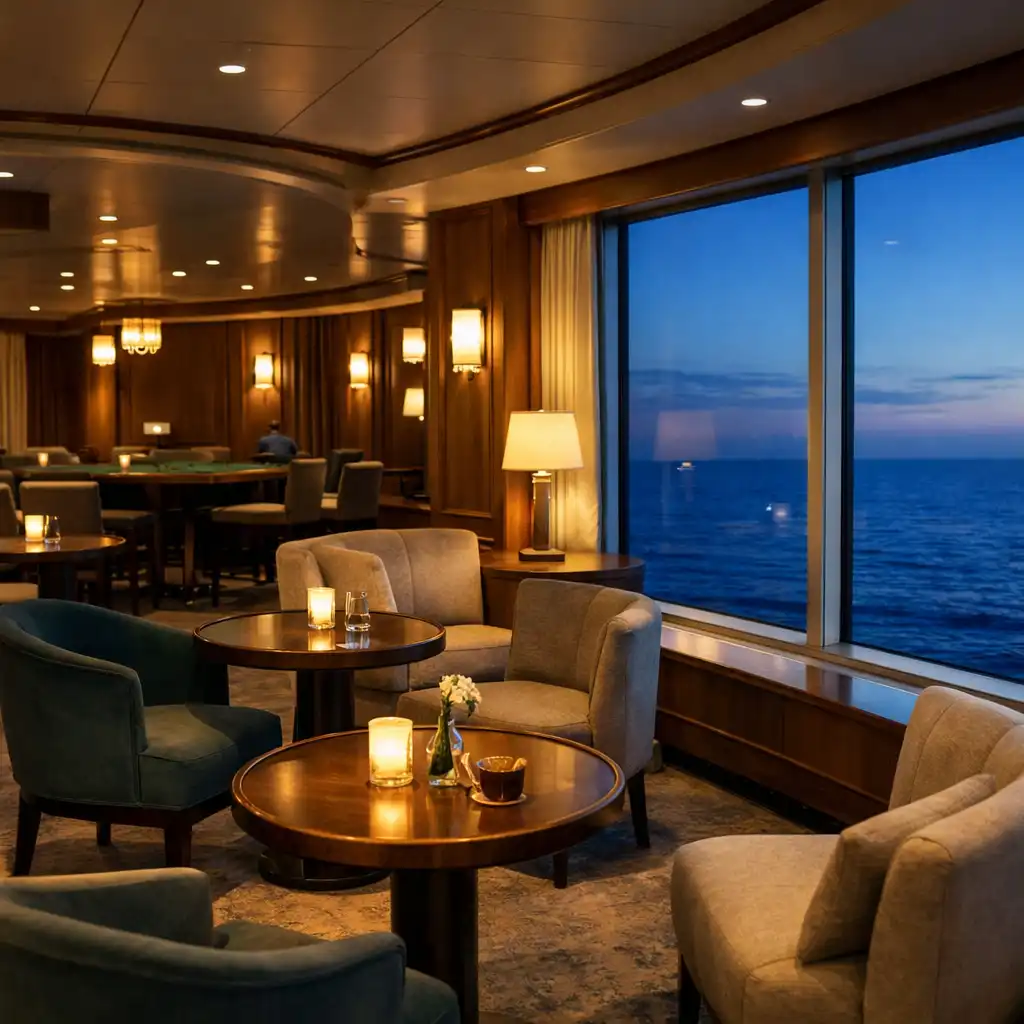
Quiet cruise ship lounge connected visually to the sea at blue hour
A casino-adjacent lounge with maritime sightlines can change the perceived relationship between the room and the ship.

Spatial connection / 06

When the sea remains part of the setting

A casino-adjacent lounge or sea-facing social space can make the onboard setting feel less enclosed. Windows, adjacency to public decks and the degree of separation from gaming tables are design differences travellers may notice. On another ship, the same functions may sit deeper within the interior, with little visual connection to the horizon. These choices affect atmosphere and spatial choice, not the certainty of any particular facility.

01

Access — Is the lounge reached from a main public route or a quieter edge?

02

Visibility — Does the room look towards the sea, adjacent venues or an enclosed interior?

03

Seating — Is there space to pause without interrupting table activity?

04

Infrastructure — How close are lifts and other public venues to the lounge area?

Research chart / 07

Compare the experience, not a promise

Casino interiors, game mix, lounge relationships, operating arrangements and etiquette guidance can all differ across ships. Use the questions below to compare what is published for the particular vessel and itinerary, including poker, roulette, blackjack and the wider lounge environment. Details need checking for each sailing rather than being assumed from another ship or route.

Keep this beside the table: Casino availability, opening times, minimum age and rules depend on the cruise line, ship, itinerary, territorial waters and applicable regulations.
Ship-by-ship research matrix
Comparison areaWhat may differQuestions to checkWhy it matters onboard
Casino location and layoutPosition within public areas, table spacing, entrances and sightlines.Where is the space shown on current ship information?Helps you understand circulation, noise and proximity to other venues.
Poker and card tablesTable presence, seating arrangement and published operating information.Is poker or another card-table setting listed for this sailing?Clarifies whether the visible environment matches your research interests.
Roulette and blackjackWhether tables are present, their placement and room visibility.What is currently described for the ship, itinerary and applicable conditions?Shows how live-table areas may shape the public room.
Lounge atmosphere and accessSeating, public-deck links, windows and connection to nearby venues.Is there a separate lounge edge, and how close are lifts or entertainment spaces?Supports practical route planning and a preferred evening setting.
Current operating conditionsAvailability, opening times, minimum age, rules and territorial requirements.What does the cruise line confirm for the selected ship and sailing?Prevents assumptions about access or operation before travelling.